
Author: Jules Hollows

Why collaboration is key to the future success of the rail industry

The re-nationalisation of rail and the introduction of Great British Railways represent one of the most significant shifts in the UK rail industry for a generation. With infrastructure, operations, and revenue brought closer together under a single guiding body, we are seeing clear ambition to simplify the system and put passengers and taxpayers first.

However, structural change alone will not deliver better outcomes. The long-term success of Great British Railways will hinge on collaboration across the industry. This is particularly true when it comes to revenue protection, an area where we estimate that fragmented approaches are costing the UK rail system over £1 billion per year.

A reset opportunity

We believe re-nationalisation creates a clear opportunity to address long-standing inefficiencies in the rail system. By reducing contractual complexity and aligning incentives, there is real potential to streamline legislation and create more consistent decision-making across the network.

When we look at revenue protection, it is important that we understand that fare evasion is not confined to individual operators or routes. It is a network-wide challenge shaped by policy, enforcement capability, technology, and passenger behaviour. Without industry-wide collaboration across each area, revenue leakage will remain difficult to control regardless of the governance model.

As it stands, revenue protection is often viewed as an operational function, focused on inspections and enforcement activity. In reality, it sits within policy, technology, and overall delivery.

Legislation defines what action can be taken, ticketing systems determine how journeys are recorded, but data shows us where the risks lie and informs how resources should be deployed. Train operating companies across the industry need confidence that processes are fair, consistent, and supported at every level.

If any of these elements operate in isolation, we risk the overall system weakening. To minimise that risk, open and transparent communication should be encouraged between train operators, technology providers – such as ourselves – and enforcement teams to ensure that revenue protection is effective, proportionate, and understandable to the public.

The importance of shared data and insight

One of the key enablers of collaboration is shared data. Under a more integrated national structure, there is a real opportunity to move away from fragmented data and inconsistent reporting and introduce a clear, shared understanding of revenue risk.

With an industry working from the same information, decisions will ultimately become more targeted, and the outcomes become measurable. Emerging patterns of fare evasion can be identified quickly, resources can be focused, and required intervention can be assessed based on evidence.

This shift will not only enable better enforcement but also greater transparency and accountability, both of which are central to the outlined objectives of Great British Railways and a top priority for the overall rail network.

Supporting staff and maintaining passenger trust

Collaboration doesn’t only impact the wider industry; it also supports frontline staff and helps to maintain passenger trust. For passengers, revenue protection officers remain the most visible point of the system; how effective they are hangs on shared data, consistent governance, and backing from the wider industry.

From a passenger’s perspective, confidence in the system will come from fairness and clarity. When approaches are inconsistent between routes and operators, the industry loses trust. Therefore, a nationally aligned approach to revenue protection reinforces that fare compliance matters and consequences are consistent.

At Raspberry Software, we firmly believe that technology should not operate in isolation but instead form part of a wider ecosystem that connects data, people, and decision-making.

Our focus is on supporting organisations within the UK rail industry to work more effectively together, using insight to inform strategy and enable proportionate, targeted approaches to revenue protection.

By enabling better connections between people, systems, and insight, we can take meaningful steps towards long-term rail equality and a smooth transition to the future rail network.

The true cost of ticketless rail travel: and what to do about it

There is no single reason people travel without a valid rail ticket. Mistakes and confusion are often as much to blame as deliberate fare evasion.

The proliferation of ticket types, zones and conditions can lead to honest mistakes among rail travellers. Passengers may have purchased a valid ticket, but for the wrong destination, route or fare type for the journey they are making. Forgotten or expired railcards are also a common factor. In some cases, broken ticket machines or unmanned ticket offices prevent passengers from buying a ticket before travel. Technology can also play a role, with app or ticket machine failures further complicating ticket purchase.

For those people who deliberately set out not to pay for their rail journey, the reasons are equally varied. Some believe their ticket won’t be checked or, if it is, they won’t be fined. Others are prepared to risk a fine if their train journey comes with an expensive price tag.

Revenue protection has been on the government radar for decades. Simplifying fare structures, improving ticketing options and adjusting penalty frameworks have all come under scrutiny as areas to focus on to help reduce ticketless travel.

But this is only part of the picture.

What is ticketless travel costing the UK rail network?

The ORR Independent review of train operators’ revenue protection practices in June 2025

estimates direct financial losses from fare evasion in Great Britain at between £350 and £400 million. We would argue that this figure is in fact much higher.

Consider the increase in annual rail journeys by approximately 150 million since 2012 – a 10% rise (source: ORR); the fact that UK rail fares have risen by approximately 46% over the same period (tracked by the Retail Price Index by the Office for National Statistics); and the introduction of multiple payment options that have given rise to more sophisticated and elusive forms of fare fraud. Given these factors – and additional data to which we have access – we estimate that the true financial cost of ticketless travel and fraud to the UK rail industry exceeds £1 billion every year. That’s £38 million every month – over £1million every single day.

But we believe that the true cost of ticketless travel runs much deeper than a numerical figure. This is money that could be invested into the wider rail network: infrastructure, more frequent and reliable services, better facilities and job creation across the sector. When this investment is lacking, it means poorer service quality for rail users, which can often discourage people from rail travel. There is also the knock on effect of higher ticket prices, which – for those prepared to risk fines for more expensive journeys – only serves to increase the fraud risk.

And, for train operating companies, the increase in rail fraud means an increase in the burden of enforcement and administrative costs. More of a TOC’s income is diverted into revenue protection officers and ticket inspectors, which only tackles the symptom, not the root cause.

What is the solution to reducing ticketless rail travel in the UK?

Rail fraud in the UK is on the rise – a result of behavioural, economic and enforcement-related factors. The increase in recorded cases is in part due to greater detection and enforcement. But the cost of living crisis and rising rail fares are also contributing factors.

Government recommendations include making buying the right ticket simpler and easier; strengthening consistency in the way passengers are treated when rail fraud is identified; introducing greater consistency and fairness in the use of prosecutions; making information on revenue protection easy to access and understand and increasing coordination, oversight and transparency of revenue protection activity. And these are all valid points.

We are seeing many TOCs increasing their fraud teams. In 2023, one TOC we spoke to had two people in its fraud team. By 2025, that number had increased to 12. But, as well all know, investing in human resources is expensive.

Our view is that a combination of technology, data analysis and cross-industry collaboration is key to reducing both intentional and unintentional rail fraud across our industry.

Our purpose-built software platform is built on over a decade’s worth of in-depth technical rail industry and revenue protection experience, and helps operators recover money more quickly, use data to prevent revenue loss and reduce fraud. From a mobile inspection app to automated back-office case management system, and business intelligence dashboards that help predict revenue loss, it covers the full rail travel cycle. We are continually investing in the platform, based on feedback from operating companies and the ever-evolving threat of rail fraud to enable TOCs to stay one step ahead in addressing this key issue head on.

Collaboration is another vital part of the jigsaw. Our annual Rail Revenue Protection & Fraud seminar brings together representatives from 70% of the UK’s train operating companies to share insight and best practice on reducing revenue loss.

We believe this kind of collaboration will help all TOCs come together to combat ticketless travel and fraud. We will continue to nurture it by providing a confidential space where operating companies can share best practice with each other along with their commitment to protecting revenue across Britain’s rail network. We look forward to continuing the conversation and driving progress, together.
There is no single reason people travel without a valid rail ticket. Mistakes and confusion are often as much to blame as deliberate fare evasion.

The proliferation of ticket types, zones and conditions can lead to honest mistakes among rail travellers. Passengers may have purchased a valid ticket, but for the wrong destination, route or fare type for the journey they are making. Forgotten or expired railcards are also a common factor. In some cases, broken ticket machines or unmanned ticket offices prevent passengers from buying a ticket before travel. Technology can also play a role, with app or ticket machine failures further complicating ticket purchase.

For those people who deliberately set out not to pay for their rail journey, the reasons are equally varied. Some believe their ticket won’t be checked or, if it is, they won’t be fined. Others are prepared to risk a fine if their train journey comes with an expensive price tag.

Revenue protection has been on the government radar for decades. Simplifying fare structures, improving ticketing options and adjusting penalty frameworks have all come under scrutiny as areas to focus on to help reduce ticketless travel.

But this is only part of the picture.

What is ticketless travel costing the UK rail network?

The ORR Independent review of train operators’ revenue protection practices in June 2025

estimates direct financial losses from fare evasion in Great Britain at between £350 and £400 million. We would argue that this figure is in fact much higher.

Consider the increase in annual rail journeys by approximately 150 million since 2012 – a 10% rise (source: ORR); the fact that UK rail fares have risen by approximately 46% over the same period (tracked by the Retail Price Index by the Office for National Statistics); and the introduction of multiple payment options that have given rise to more sophisticated and elusive forms of fare fraud. Given these factors – and additional data to which we have access – we estimate that the true financial cost of ticketless travel and fraud to the UK rail industry exceeds £1 billion every year. That’s £38 million every month – over £1million every single day.

But we believe that the true cost of ticketless travel runs much deeper than a numerical figure. This is money that could be invested into the wider rail network: infrastructure, more frequent and reliable services, better facilities and job creation across the sector. When this investment is lacking, it means poorer service quality for rail users, which can often discourage people from rail travel. There is also the knock on effect of higher ticket prices, which – for those prepared to risk fines for more expensive journeys – only serves to increase the fraud risk.

And, for train operating companies, the increase in rail fraud means an increase in the burden of enforcement and administrative costs. More of a TOC’s income is diverted into revenue protection officers and ticket inspectors, which only tackles the symptom, not the root cause.

What is the solution to reducing ticketless rail travel in the UK?

Rail fraud in the UK is on the rise – a result of behavioural, economic and enforcement-related factors. The increase in recorded cases is in part due to greater detection and enforcement. But the cost of living crisis and rising rail fares are also contributing factors.

Government recommendations include making buying the right ticket simpler and easier; strengthening consistency in the way passengers are treated when rail fraud is identified; introducing greater consistency and fairness in the use of prosecutions; making information on revenue protection easy to access and understand and increasing coordination, oversight and transparency of revenue protection activity. And these are all valid points.

We are seeing many TOCs increasing their fraud teams. In YEAR, one TOC we spoke to had two people in its fraud team. By 2025, that number had increased to 12. But, as well all know, investing in human resources is expensive.

Our view is that a combination of technology, data analysis and cross-industry collaboration is key to reducing both intentional and unintentional rail fraud across our industry.

Our purpose-built software platform is built on over a decade’s worth of in-depth technical rail industry and revenue protection experience, and helps operators recover money more quickly, use data to prevent revenue loss and reduce fraud. From a mobile inspection app to automated back-office case management system, and business intelligence dashboards that help predict revenue loss, it covers the full rail travel cycle. We are continually investing in the platform, based on feedback from operating companies and the ever-evolving threat of rail fraud to enable TOCs to stay one step ahead in addressing this key issue head on.

Collaboration is another vital part of the jigsaw. Our annual Rail Revenue Protection & Fraud seminar brings together representatives from 70% of the UK’s train operating companies to share insight and best practice on reducing revenue loss.

We believe this kind of collaboration will help all TOCs come together to combat ticketless travel and fraud. We will continue to nurture it by providing a confidential space where operating companies can share best practice with each other along with their commitment to protecting revenue across Britain’s rail network. We look forward to continuing the conversation and driving progress, together.
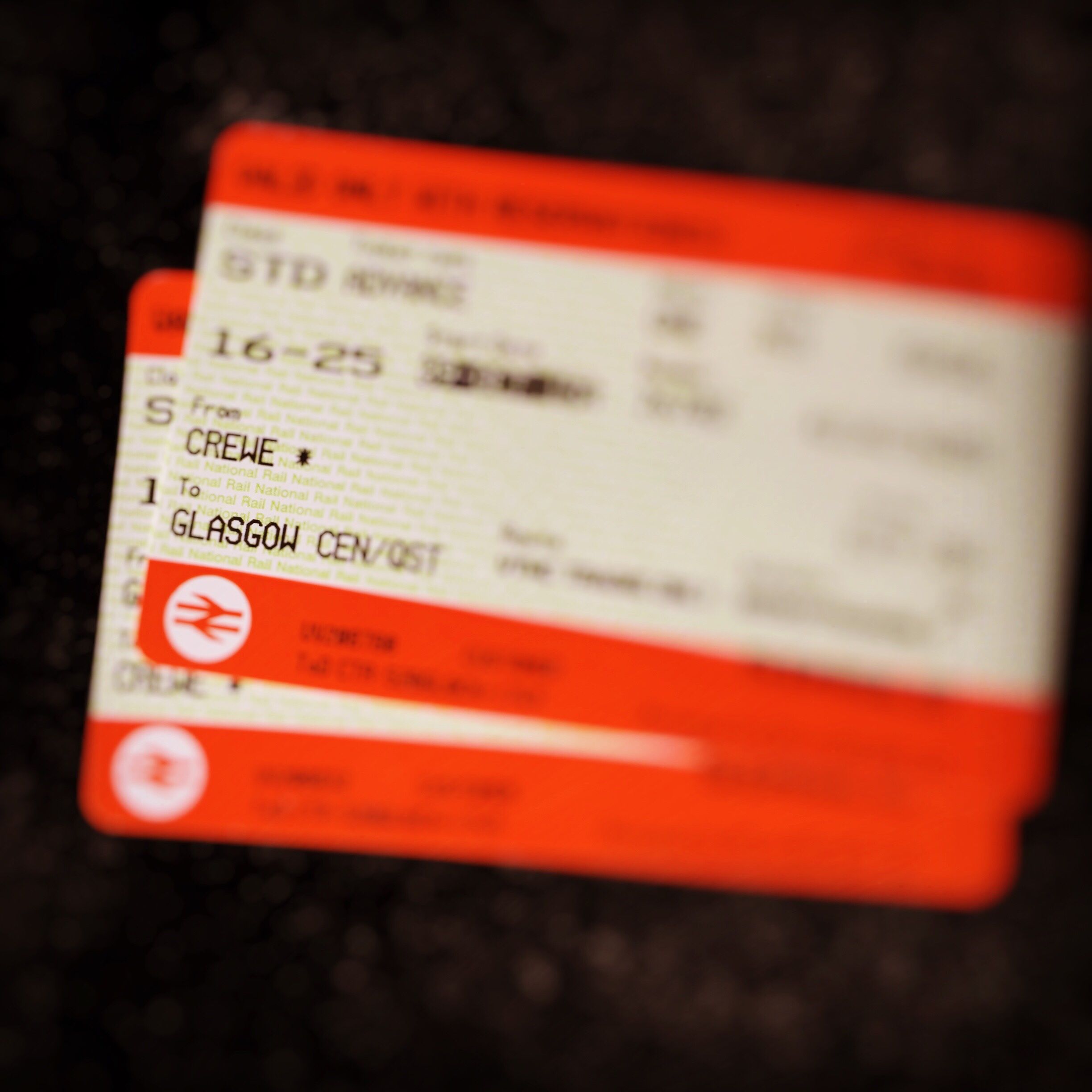
A new era of travel: modernising rail ticketing in the UK

The UK rail network is stepping into the future of ticketing with location-based digital ticket technology, now being trialled across routes in the Midlands and the North of England. The trial lets passengers use a smartphone app that automatically checks them in and out of journeys using GPS technology, tracks the journey and then applies the best value fare at the end of the travel day. There is also an option to generate a barcode in the app for inspections or ticket gate access.

This ambitious initiative, backed by the Department for Transport, aims to simplify rail fare payments and make journeys more flexible. But what does it really mean for passengers, operators, revenue protection, and the broader rail tech ecosystem?

What are the benefits of digital ticketing?

No longer needing to choose and buy the right ticket before they board aims to make travel an easier experience for passengers. The app promotes spontaneous and flexible travel by capturing their journey and ensuring they pay the most cost-effective fare. This convenience is a major step forward from traditional paper or pre-purchased mobile tickets, purporting to help reduce confusion and barriers to rail travel.

For operators and tech partners, this trial opens the door to a fully digital ticketing lifecycle, from journey capture to fare calculation and enforcement. This is something that modern revenue protection tech firms like us have been evolving for years with products that manage inspection, penalties, fraud detection, and back-office workflows.

Traditional UK rail fare structures can be bewildering, with millions of different ticket types and prices. By calculating the best fare after travel, the system removes guesswork and can increase passenger trust in pricing fairness.

What challenges could arise with GPS-based ticketing?

GPS-based tracking needs to be highly reliable, any accuracy challenges can lead to incorrect charge calculations or disputes over where and when journeys began and ended. Urban environments, underground stretches, or signal interference may lead to inaccurate journey data, and reliability is important if pricing decisions are based on that data.

Using location data for ticketing also introduces privacy questions. Though passengers opt in, public attitudes toward continuous location tracking vary. Some potential users may be uncomfortable trusting an app with precise travel movement, especially if they don’t fully understand how the data is stored, processed, and protected.

Rail networks have highly diverse legacy ticketing infrastructure and integrating a new digital system with existing revenue protection, enforcement tools and back-office systems requires careful technical coordination. Modernisation is more than just a passenger app, it’s connecting that app with everything from train operator systems to revenue tracking and legal enforcement processes.

Rolling out any new ticketing paradigm creates teething issues: confusing support queries, edge-case journeys, or occasional system glitches. Operators and tech partners must be prepared with clear communication and robust support channels so passengers don’t become frustrated or mistrustful.

What does the future of rail ticketing look like?

The success of this trial could pave the way to a national rollout of more intuitive, digital ticketing solutions. The aim is to not only improve the passenger experience but also drive operational efficiencies and modernising revenue protection across the rail industry.

At Raspberry Software we have spent over two decades building rail-specific software solutions that help operators detect and reduce ticket fraud, streamline enforcement, and manage revenue protection workflows. We believe that ticketing reform isn’t just about mobile apps for passengers but about robust systems that support the entire revenue protection ecosystem.

As the UK tests this new approach, insights from experienced rail tech providers will be crucial, both in celebrating wins and addressing challenges early. We will be watching with interest to learn the outcomes of these tests as we continue to work alongside train operating companies to implement the best revenue protection solutions for their business.

Revenue Protection & Fraud in the Rail Industry

The Current Challenge within Revenue Protection & Fraud in the Rail Industry

Executive Summary

The ORR’s publication of its report into Revenue Protection and Fraud (May 2025) has caused an element of disruption across Train Operating Companies (TOCS) in the UK. 

Its findings have been fully supported and sanctioned by both the DfT and indeed the Secretary of State, Heidi Alexander MP. 

Revenue Protection and Fraud practices need to be standardised across the UK rail industry. 

The way to achieve this is relatively straightforward and requires the following: 

  1. Legislation – needs to be changed to reduce contradiction across current (and older) byelaws
  2. People – an industry standard code of conduct and associated training 
  3. Technology – standardised technology to support:  compliance, auditability, consistent processes and data to support pro-active intelligence.

The Problem

One of the clear recommendations from the ORR’s report was that there needs to be a “common framework for handling fare evasion and irregular travel”. The findings then go on to state that “definitions, processes, and outcomes to reduce variation across operators”

Whilst “National-level coordination is recommended”, we all know there is a lot of transition happening across the industry. 

Currently, we have a number of organisations that are involved with revenue protection and fraud within the railway industry. In one capacity or another, they include: The Department for Transport, the Rail Delivery Group, the ORR and Shadow GBR. 

As we know, elements of the above will of course ultimately form GBR.

So whilst there is current uncertainty surrounding revenue protection and fraud practices across the rail industry, what we do know is: 

  • Most TOC’s (not all) are using similar methodologies but with differing levels of success and efficiencies
  • Nationalisation not likely to be completed for another 2 years
  • GBR is unlikely to be formed until mid-2027 
  • All TOC’s will have to adhere to the ORR’s recommendations
  • UK TOC’s will need to standardise processes and outcomes 
  • Legislation needs to be tweaked
  • Ticket pricing needs to be standardised to avoid passenger confusion
  • A certain decision needs to be made/reversed immediately prior to said information  falling into the public domain – the financial impact will be catastrophic!
  • This growing £1 billion problem needs to be addressed through collaboration.

The Current Approach 

For the last few months, the current DFTO owned TOC’s (Northern, Southeastern Trains, South Western Trains & TransPennine Trains) have taken the initiative to collaboratively steer industry standards in line with the ORR’s recommendations. 

Unsurprisingly, these TOC’s are ahead of the game in a number of areas in that they have already been deploying similar methodologies, business processes and levels of compliance, however, there is still a little way to go. 

Going Forward

Fraud across the industry is rife and growing. To combat it, fraud teams across all TOC’s are growing in size exponentially. Two years ago, one TOC had 2 people in its fraud team, today it has 12!! 

However, increasing the size of a fraud team as a standalone strategy doesn’t work. It requires innovative technology, data analysis and cross-industry collaboration to support any kind of impact. 

Strategy  

Stopping revenue leakage from fraud and ticketless travel is often the fastest, most impactful, and most controllable way to improve financial performance in the rail industry. 

Other areas of revenue growth (premium services, ancillary products, advertising, customer experience improvements, promotions) are still important, but they usually provide longer-term, incremental benefits rather than immediate recovery of lost income.

Tackling fraud and ticketless travel, therefore, addresses one of the largest and most controllable revenue risks and should be a lot higher up the list of priorities in some TOC’s strategy’s than it currently is. 

Conclusion 

Recently, DFTO owned TOC’s have concluded that collaboration and the sharing of industry best practice is working well. Compliance to some of the ORR’s recommendations is in the main, already in situ. However, the remaining recommendations will be achievable with slight amendments to current practices, supported by training and technology.  

Why Do you Need Raspberry Software’s Help? 

We are industry thought leaders, as well as a leading revenue protection and fraud technology company. 

  • We launched the industry’s first annual Revenue Protection & Fraud Seminar to initiate cross TOC collaboration and innovation
  • Our pedigree and credibility is such, that the ORR and DfT ask us to consult them on numerous revenue protection and fraud challenges
  • We are pivotal in supporting the DFTO TOC’s through the current and future delivery of technology and data to ensure that compliance and innovation is supporting their strategic direction. 

To find out more about the unique methodologies that we are deploying to support industry standardisation in revenue protection and fraud, please contact jules.hollows@raspberrysoftware.com 

Reassessing the Scale of Ticketless Travel and Fraud in UK Rail

Measuring Ticketless Travel

The current methodologies used to estimate the impact of ticketless travel and associated fraud across UK rail and tram networks are outdated and fail to leverage the modern technologies readily available to the industry. These legacy systems—prone to significant human error and inherent inaccuracies—continue to produce figures that may satisfy limited stakeholder needs but grossly underrepresent the true scale of the problem.

Digital Transformation & Data

Today’s train operating companies (TOCs) possess the digital infrastructure and data capabilities necessary to conduct far more accurate and meaningful assessments of lost revenue due to fare evasion and fraud. Yet, this potential remains largely untapped.

Driving Change

It is imperative that new, technology-driven methodologies are introduced. These would empower entities such as the Department for Transport (DfT) and the future Great British Railways (GBR) to audit loss estimates with greater precision. Only then can effective policies and legislative frameworks be implemented to support TOCs in tackling this growing challenge.

Revenue Loss – Outdated Figures

The oft-cited figure of £240 million per annum in losses—an estimate that has persisted since 2012—is not only outdated, it is fundamentally inaccurate.

Consider the following developments since 2012:

  • Passenger growth: Annual rail journeys have increased by approximately 150 million, representing a 10% rise (source: Office of Rail and Road).
  • Fare increases: UK rail fares have risen by approximately 46% over the same period, based on year-on-year regulated fare hikes tracked via the Retail Price Index (RPI) by the Office for National Statistics (ONS).
  • Payment innovation: The introduction of multiple payment options has enhanced the passenger experience and, in some cases, improved revenue capture. However, these advancements have also given rise to more sophisticated and elusive forms of fare fraud.

Given these factors—and additional data to which we have access—it is reasonable to argue that the true annual cost of ticketless travel and fraud to the UK rail industry exceeds £1 billion.

This is not merely a revenue protection issue; it is a strategic challenge that demands immediate attention, investment, and innovation.

Fare Dodgers: At War with the Law

The recent series on C5 has demonstrated some very successful outcomes.

Serial fare dodgers have learned that buying tickets for ‘shortened’ journeys is not a methodology that can be deployed in order to escape capture through fare evasion and defrauding the Train Operating Company’s (TOC’s).

The TOCs all now have clever analytical people working in Fraud teams who have access to a minefield of data.

This data, has led to a number of high profile (and not so high profile) prosecutions, with the culprits losing careers and sometimes being very close to being imprisoned.

I have no doubt that with the increasing complexities of fare evasion methods being deployed, the size of these fraud teams will grow exponentially.

However, TOC’s need to be proactive in accelerating the size of their Fraud teams, before the problem dwarfs them, resulting in the ability to continue to re-invest at current levels.

As a source of reference, it is of course Raspberrys’ TIPS revenue protection system that is deployed by South Western Rail.